Choosing a provider for extensive dental repair requires more than comparing the price of each crown. You need to identify which teeth can be preserved, whether a bridge is safe for the supporting teeth, and whether the clinic can plan, fabricate, fit, and maintain a coordinated result.
Key takeaways
- Match each tooth to the least invasive suitable restoration.
- Compare materials, planning, laboratory work and follow-up between Nashik providers.
- Choose bridges, implants or dentures based on bone, support and cleaning access.
- Approve a written staged plan covering costs, materials, risks and repairs.
Start by deciding what each tooth actually needs
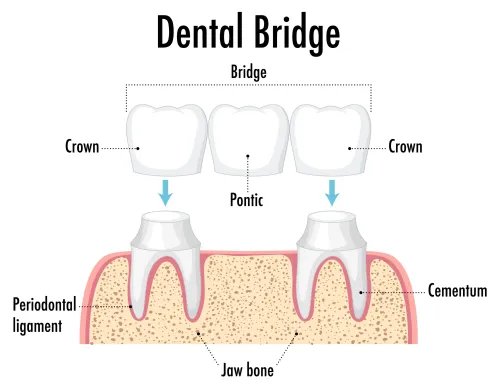
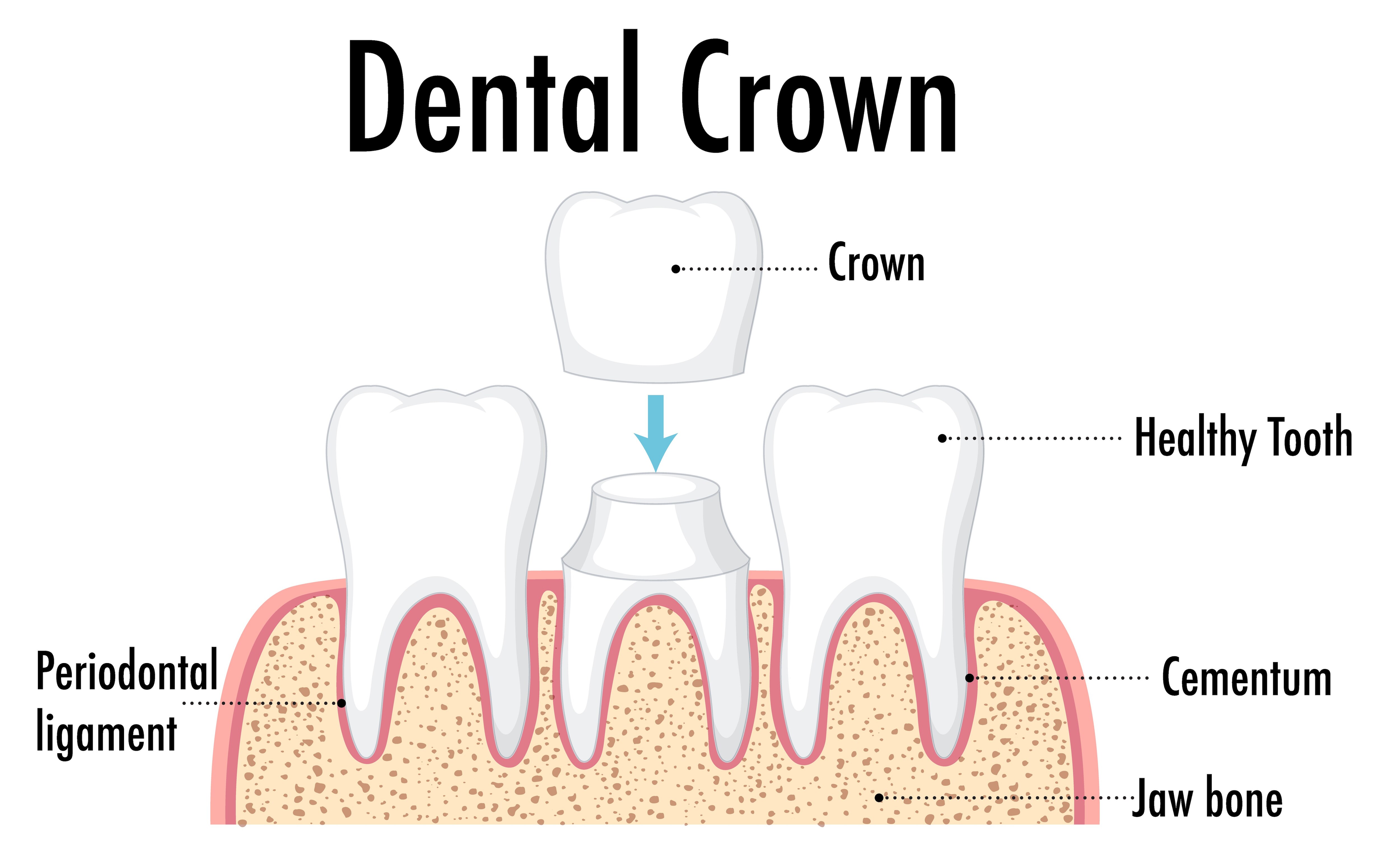
Full-mouth repair should not mean crowning every visible tooth. Selective treatment preserves natural tooth structure: fillings repair limited decay, inlays and onlays restore larger defects without covering every cusp, and veneers change the front surface. A crown covers an existing tooth or implant; a bridge replaces a missing tooth using adjacent teeth or implants.
Implants replace roots, while dentures replace several or all teeth removably.
A crown is easier to justify when a tooth has extensive structural loss, a failing large filling, a crack, or has undergone root-canal treatment. The phrase full mouth crowns in Nashik should therefore describe a diagnosis-led plan, not a uniform package. For crowns and bridges for full mouth repair in Nashik, ask for this assessment:
- Review your medical and dental history, then chart every tooth, existing restoration, missing tooth, and remaining tooth structure.
- Measure gum pockets and mobility, test vitality, examine photographs, and review your bite, chewing pattern, jaw joints, and vertical dimension.
- Use indicated X-rays, photographs, digital scans or impressions, and implant imaging when anatomy requires it; three-dimensional imaging is not automatic for every conventional bridge.
- Treat active decay, gum disease, infection, loose teeth, weak bone, or an unstable bite before definitive restorations. A provisional restoration can test speech, appearance, chewing, comfort, cleansability, and the bite.
A crown does not automatically require root-canal treatment. Demand symptoms, vitality findings, and radiographic evidence before accepting endodontic treatment; removing a healthy pulp will not strengthen a weak tooth.
Compare the Nashik providers behind the restoration
Look first for a prosthodontist with an MDS in Prosthodontics and Crown & Bridge, a general dentist experienced in complex restorative cases, an implant center, or a hospital dental department. Verify the treating dentist’s registration and postgraduate qualification; clinic advertising is not proof of expertise.
| Provider | Strength to compare | Questions to ask |
|---|---|---|
| Prosthodontist | Complex crowns, bridges, bite, and rehabilitation planning | Who plans and delivers the prosthesis? |
| Experienced general dentist | Convenient comprehensive restorative care | How many full-mouth cases does the dentist manage? |
| Implant center | Surgical and implant-supported options | Who performs implant planning, surgery, and maintenance? |
| Hospital dental department | Access to medical support | How are medically complex patients assessed and followed? |
Ask who performs tooth preparation, laboratory coordination, cementation, adjustments, and follow-up. Confirm the dental laboratory’s name, proposed material, fit-check process, margin and contact checks, implant-planning capability, hygiene support, and arrangements for patients with diabetes, heart disease, blood thinners, or other medical risks.
A fixed teeth dentist in Nashik must define “fixed” precisely: a natural-tooth bridge, an implant-supported bridge, or a full-arch implant prosthesis. These differ in surgery, cleaning, maintenance, and failure risk; a removable overdenture can be safer when fixed support is weak.
Dr. Bhonsale's Dental Clinic & Implant Center is one Nashik option for patients wanting restorative, prosthetic, and implant planning in one setting, but compare its qualifications, laboratory arrangements, materials, and written treatment plan with other providers.
A dental crown and bridge clinic in Nashik should itemise examinations, imaging, temporaries, laboratory work, implants, adjustments, follow-ups, and replacement terms.
Related services
Fixed Teeth (Crowns & Bridges) Crowns (caps) and bridges are fixed prosthetic devices used to restore damaged teeth or replace missing ones. View service → |
Full mouth rehabilitation is a comprehensive approach to restore and rebuild a patient’s entire oral function and aesthetics. View service → |
Check whether a bridge is safer than an implant or denture
A conventional bridge is appropriate when a short missing-tooth space has sound, well-rooted supporting teeth, healthy gums, manageable bite force, and enough access to clean beneath the replacement tooth.
The dentist must assess the number and position of missing teeth, root support, periodontal health, span length, and whether the abutments are mobile, cracked, or heavily restored.
| Option | Main requirement | Important risk or limitation |
|---|---|---|
| Tooth-supported bridge | Strong, stable abutment teeth on both sides | Preparing healthy teeth is irreversible; long spans increase biological and mechanical stress |
| Implant crown or bridge | Adequate bone volume and cleanable gum tissue | Smoking, poorly controlled diabetes, gum disease, medications, sinus or nerve anatomy, and poor cleaning can change suitability |
| Removable denture or overdenture | Enough support and the ability to remove and clean it | It moves more than fixed teeth, but an overdenture can be safer and more hygienic than overloading weak abutments |
An implant is not automatically safer. Implant planning includes medical history, diabetes control, smoking, gum treatment, and three-dimensional imaging when bone, sinus, or nerve anatomy requires it; CBCT is not automatic for every conventional bridge. Ask any fixed teeth dentist in Nashik whether “fixed” means a natural-tooth bridge, implant bridge, or full-arch prosthesis.
For crowns and bridges for full mouth repair in Nashik, choose the option you can clean and maintain, not simply the one that feels most permanent. A prosthodontist should explain why a bridge, implant, or overdenture fits your support and bite.
Expect a staged plan, not immediate permanent teeth
Permanent crowns and bridges usually come last, after disease control and a diagnostic phase. A full mouth crowns in Nashik plan may include several treatment stages rather than one appointment:
- Treat active decay and gum disease, then reassess bleeding, pocket depths, infection, and tooth stability.
- Use fillings, inlays, or onlays when they preserve enough natural tooth structure.
- Perform root canal treatment or extraction only when symptoms, vitality findings, and radiographic evidence justify it.
- Allow implants to heal before attaching the final crown or bridge.
- Prepare the teeth and provide temporary crowns or bridges.
Do not accept root canal treatment automatically before a crown. Ask for the tooth’s vitality result, symptoms, X-ray findings, and the clinical reason; unnecessary endodontic treatment removes more tooth structure.
Provisional restorations test appearance, speech, chewing, cleansability, comfort, and the bite. At try-in visits, check margins, contacts, contours, shade, and occlusion before cementation or final laboratory approval.
| Restoration | Retention | Key checks |
|---|---|---|
| Natural-tooth crown or bridge | Cement-retained | Margin fit, contacts, cleansability, and bite |
| Implant crown or bridge | Screw-retained or cement-retained | Implant components, retrievability, access, and occlusion |
A dental crown and bridge clinic in Nashik should provide a written estimate covering examinations, X-rays or CBCT, gum treatment, core build-ups or posts, temporaries, laboratory work, cementation, adjustments, implant components, follow-ups, and replacement or warranty terms. Compare the complete plan, not only the per-crown fee.
Know what you are approving and how failed work is handled
Approve the fit, not just the material. Ask the dental crown and bridge clinic in Nashik to show you the laboratory prescription and inspect margins, contacts, contours, and bite before cementation.
| Material | Suitable location | Strength and thickness | Appearance, wear, and repair |
|---|---|---|---|
| Metal | Posterior teeth or hidden areas | Strong with minimal thickness | Least translucent; usually repairable by the laboratory |
| Porcelain-fused-to-metal | Front or back teeth | Reliable strength; needs space for porcelain | Good appearance; porcelain can chip; repair depends on damage |
| Lithium disilicate | Visible crowns and selected short bridges | Strong ceramic; needs controlled clearance | High translucency; adhesive repair is possible for small defects |
| Zirconia | Posterior crowns and selected bridges | High bite-load resistance; newer types allow thinner designs | Good appearance, less glass-like; repair and adjustment depend on the grade |
| Other ceramics | Selected cosmetic cases | Thickness and strength vary by ceramic | Choose only after the laboratory confirms indications and repair options |
Ask who designs and fabricates the work, whether the laboratory is identifiable, and whether it can produce the required thickness and shade. “Premium” does not answer those questions.
Bridge replacement in Nashik requires examination and radiographs before recementation. Recurrent decay, abutment fracture, gum-support loss, poor fit, cement washout, excessive bite force, or an endodontic problem can require a new bridge, implant, denture, or extraction instead.
Maintain the result by brushing, using an interdental brush or floss threader beneath the bridge, and using a water flosser correctly. Attend professional reviews; request bite monitoring or a night guard when grinding is present.
Frequently asked questions
Does full-mouth repair mean placing crowns on every tooth?
No. Fillings, inlays, onlays and veneers can treat selected problems while preserving more natural tooth structure. A crown is used when a tooth or implant needs full coverage.
How do you compare providers for crowns and bridges in Nashik?
Ask about the examination, X-rays, treatment sequence, crown and bridge materials, laboratory process, temporary restorations, written costs and follow-up after fitting.
Is a bridge safer than an implant or denture?
The safest choice depends on the condition of neighbouring teeth, available bone, gum health, cleaning access and your ability to maintain the restoration. Compare all three options before deciding.
Why are full-mouth restorations completed in stages?
Staging lets the dentist treat infection and gum disease, test the bite with temporary teeth, confirm appearance and function, and adjust the plan before permanent restorations are fitted.
What should you approve before crown or bridge treatment begins?
Approve a written plan identifying each tooth, restoration type, material, laboratory work, fees, temporary stages, expected maintenance and how adjustments or failed work will be handled.
Keywords